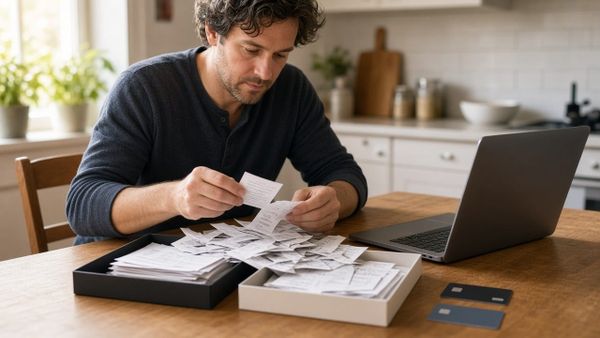
How Long Do You Have to Keep Business Records in Canada? The 6-Year Rule and Its Exceptions
Most Canadian business records must be kept 6 years from the end of the tax year they relate to, with key exceptions. What to keep, how long, and where.

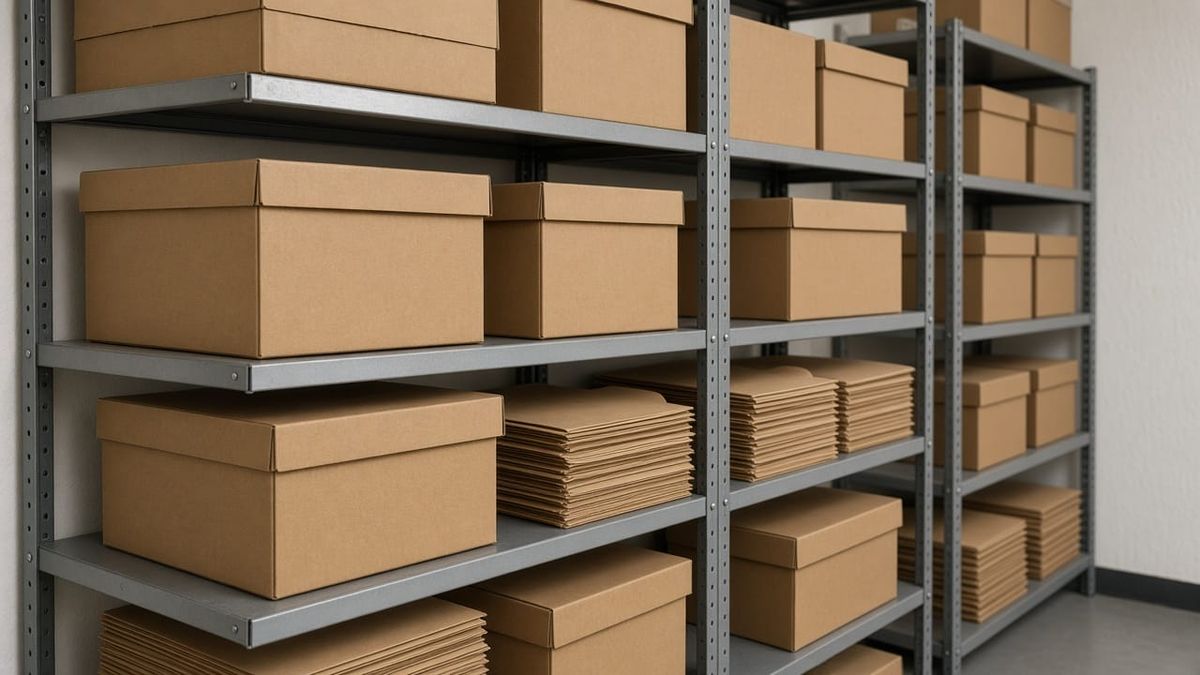
Canadian businesses generally have to keep their records and supporting documents for six years from the end of the last tax year they relate to (canada.ca, keeping records). The big exceptions: records for a return you file late must be kept for six years from the date you file it, records tied to an objection or appeal must be kept until it's fully resolved, and some corporate and property records have to be kept much longer, in some cases indefinitely.
That sounds simple until you're sorting through a storage room of banker's boxes, three old laptops and an email inbox full of PDF invoices. This guide explains what the rule actually covers, the exceptions that catch business owners out, where the records have to live, and what to do if you're behind and some of them are already missing.
The general rule: six years from the end of the tax year
The six-year clock does not start when you receive a receipt. It starts at the end of the tax year the record relates to. For a corporation, the tax year is its fiscal period. For a sole proprietor or partner, it's the calendar year.
So if your corporation's year end is March 31, an invoice dated May 2025 belongs to the fiscal year ending March 31, 2026, and the six years run from that date. The same idea applies to GST/HST, payroll (CPP and EI) and excise records: the CRA applies a similar retention period under each of those laws.
"Records" is broad. It includes anything that supports what you reported:
- Bank and credit card statements for every account the business used
- Sales invoices, contracts and payment processor reports (Stripe, Square, Shopify, Amazon)
- Purchase invoices and receipts
- General ledgers, journals and year-end working papers
- GST/HST, PST and payroll returns, plus the calculations behind them
- Payroll registers, timesheets, T4 and T4A records
- Vehicle logbooks and home-office calculations
- Loan agreements, leases and asset purchase documents
If a number on a return came from somewhere, the somewhere is a record.
Quick reference: how long to keep what
| Record | Keep for |
|---|---|
| Bank and card statements, invoices, receipts | 6 years from the end of the tax year they relate to |
| Records for a return you filed late | 6 years from the date you filed it |
| Records for an objection or appeal | Until it's resolved, any further appeal deadline has passed, and the 6-year period is over (whichever is latest) |
| Long-term asset purchases and sales, share registry, history affecting a sale or wind-up | Indefinitely |
| Records of a corporation that is dissolved | 2 years after the date of dissolution |
| Records of an unincorporated business that closes | 6 years from the end of the tax year it ended |
| Payroll records | 6 years from the end of the year they relate to |
| GST/HST records | 6 years after the last year they may be needed for GST/HST reporting |
The CRA can also tell you in writing (in person or by registered mail) to keep specific records longer than six years.
The exceptions that catch owners out
Late-filed returns restart the clock
This is the one that matters most for anyone who is behind. If you file an income tax return late, you must keep the records for six years from the date you actually file it. A year that has never been filed hasn't started its retention clock at all.
Example (hypothetical): a Toronto marketing agency with a December year end finally files its 2020 T2 in 2026. It has to keep the 2020 records until 2032, not 2026. Shredding them "because they're more than six years old" would leave the corporation unable to support its own return.
GST/HST works the same way in spirit. If a GST/HST return for a period that ended more than six years ago was never filed, you still have to file it and keep the records that support it.
Objections and appeals
If you've filed a notice of objection or an appeal, keep everything connected to it until the latest of three dates: the date it's resolved, the date for any further appeal passes, or the end of the normal six-year period. If you're disputing an arbitrary assessment, for example, the records you use to reverse a CRA arbitrary assessment need to stay with the file.
Property, shares and corporate history: keep indefinitely
Records about long-term acquisitions and disposals of property, the share registry, and other history that would affect a sale, liquidation or wind-up of the business have to be kept indefinitely. In practice that means the purchase documents for a building, equipment or a business you bought, records of shares issued and transferred, and the corporate minute book. You'll need them to work out a gain or loss years later, and a buyer's due diligence team will ask for them too.
Closing or dissolving the business
When a corporation is dissolved, it must keep its records for two years after the date of dissolution. An unincorporated business that stops operating keeps its records for six years from the end of the tax year in which it ended. If you're thinking about closing a corporation that still has unfiled years, deal with the filings first; dissolution doesn't make outstanding obligations disappear.
Where records have to be kept
You must keep records at your place of business or your residence in Canada, unless the CRA gives you written permission to keep them elsewhere. One detail surprises a lot of owners: the CRA says records kept outside Canada and accessed electronically from Canada are not considered records kept in Canada. If your accounting data or document storage sits with a provider outside the country, check what that means for you, and ask your tax services office for written permission if you need it.
Paper or digital?
Digital records are fine, and for most small businesses they're better. A few practical rules:
- If you keep records electronically, keep them in an electronically readable format, even if you also have paper copies.
- Scanned receipts are generally acceptable when the image is clear and complete and you scan consistently, but be careful with anything that is hard to read once scanned (faded thermal paper is the classic problem).
- Keep a backup that you control. A cloud bookkeeping subscription you cancel, or a former bookkeeper's login, is not a retention plan.
- Export your general ledger and reports at each year end into a format you can open without the software.
Can you destroy records early?
Only with written permission from the CRA. You can ask using Form T137, Request for Destruction of Books and Records, or by writing to the CRA. Don't destroy anything early while you're behind, under review, or in a dispute.
Why the six-year rule isn't the same as the reassessment period
Business owners often mix up two different time limits. The normal reassessment period (generally three years from the original notice of assessment for Canadian-controlled private corporations and individuals, and four years for most other corporations) is how long the CRA normally has to change a return. The record retention period is longer, six years, and the CRA can go back further where it believes there was misrepresentation through carelessness or wilful default, or fraud. Keeping records for the full period is what protects you if a question comes up late.
Why this matters even more when you're behind
When we take on a catch-up file, records are usually the bottleneck, not the accounting. The most common gaps are missing bank statements for closed accounts, payment processor reports nobody downloaded, and receipts that only ever lived in someone's email. The good news: most of it can be rebuilt.
- Banks can usually reissue old statements, and many years can be downloaded from online banking.
- Payment platforms keep transaction histories you can export.
- Suppliers can resend invoices and statements of account.
- Your CRA account shows what was filed, assessed and paid, which helps reconstruct earlier years.
If you've changed accountants and your old file is stuck, start with what you control: your bank, your platforms and your CRA account. Our guide on what to do when your accountant isn't responding covers getting your file back and moving CRA access.
A simple retention system that works
- Create one folder per tax year, with subfolders for bank, sales, purchases, payroll, sales tax and year end.
- Save bank and card statements monthly as PDFs, plus a CSV export.
- Snap receipts as you go and attach them to the transaction in your bookkeeping software.
- At year end, export the general ledger, trial balance and filed returns into that year's folder.
- Keep a separate "permanent" folder for incorporation documents, the minute book, share records, leases, loans and asset purchases.
- Once a year, check which years have passed their retention date before deleting anything, and remember late-filed years run from the filing date.
How Sansar helps
Sansar keeps reconciled books and copies of filed returns for clients, and rebuilds missing years when records have gaps, with one all-inclusive flat rate: no hidden fees, no retainer; 50% deposit to start and 50% on completion, after you approve your filings. It's backed by our 100% Happiness Guarantee. See our virtual bookkeeping services, the step-by-step guide on how to catch up on bookkeeping in Canada, and our catch-up bookkeeping guide. If you're behind on returns, our page on late tax filing explains the order we tackle years in.
Book a free call to talk through your records → · How onboarding works and what documents we need →
Related reading: CRA late-filing penalties explained and what the CRA does when a corporation has never filed.
FAQ
Can I throw out business records after six years? Generally yes, once six years have passed from the end of the tax year they relate to. The exceptions are records for a return you filed late (six years from the filing date), records tied to an objection or appeal, long-term property and share records, and anything the CRA has told you in writing to keep longer.
Do I need to keep paper receipts if I scan them? Usually not, as long as the scans are clear, complete and kept in a readable electronic format as part of a consistent process. Keep originals for anything that doesn't scan legibly.
Can I store my business records in the cloud? Yes, but the CRA says records kept outside Canada and accessed electronically from Canada are not considered kept in Canada. If your storage is outside the country, ask the CRA for written permission or keep a copy in Canada.
How long should a corporation keep its minute book and share register? Indefinitely while the corporation exists, because they affect any future sale, liquidation or wind-up. After a corporation is dissolved, its records must be kept for two years after the dissolution date.
Can I destroy records before the six years are up? Only with written permission from the CRA, which you can request on Form T137, Request for Destruction of Books and Records.
Does the six-year rule apply to GST/HST and payroll records? Yes. Similar retention rules apply under the Excise Tax Act (GST/HST), the Canada Pension Plan and the Employment Insurance Act, so plan on six years for those records as well.
Written by Gurdeep Sangha, founder of Sansar Solutions, a Vancouver-based bookkeeping and tax firm serving small businesses across Canada (mainly Ontario, Alberta and BC). Bookkeeping and tax filing for business owners, without CPA-firm pricing. When you need a Notice to Reader or review engagement, we bring in our partner CPAs. This guide is general information, not tax or legal advice for your situation. Last reviewed: October 2026.